
Introduction
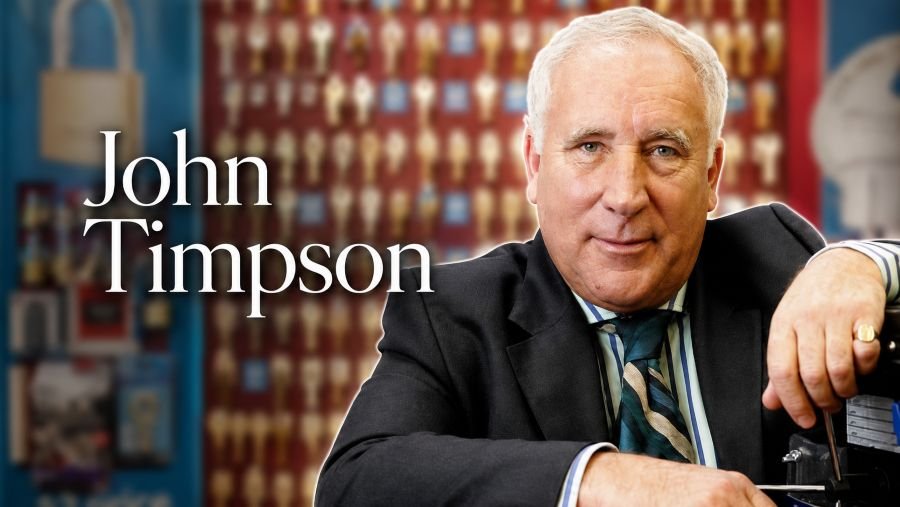
Sir John Timpson is a British businessman, author, foster-care supporter, and the long-serving chairman of Timpson Group. He is best known for transforming a traditional shoe business into a large service company built around trust, employee freedom, and personal customer care.
As of July 2026, John Timpson remains chairman of the family-owned group. The company operates more than 2,000 shops across the United Kingdom and Ireland through businesses including Timpson, Max Spielmann, Snappy Snaps, Johnsons Cleaners, Jeeves of Belgravia, and The Watch Lab.
However, his importance goes beyond the number of shops he helped build. John Timpson became known for an unusual leadership system called Upside Down Management. Instead of placing senior managers at the top of the organisation, the system gives customer-facing employees the authority to make everyday decisions.
His career offers a simple but powerful leadership lesson: a company can grow by trusting good people, keeping rules clear, helping communities, and changing its services when customer needs change.
Who Is John Timpson?
John Timpson’s full name is William John Anthony Timpson. He is a British retail businessman who was born in March 1943.
He began working in the family company as a shoe-shop assistant in Altrincham in 1960. He later became a company director and eventually led the business through one of the most important changes in its history.
The official Timpson Group leadership page identifies him as company chairman and says he remains actively involved in the business. His position as an active director is also recorded by UK Companies House.
John Timpson is mainly known for:
- Leading the Timpson management buyout in 1983
- Moving the company away from ordinary shoe retail
- Expanding into repairs, key cutting, photography, dry cleaning, and related services
- Creating Upside Down Management
- Supporting the employment of people leaving prison
- Fostering children with his late wife, Alex
- Writing books about management, family companies, and attachment
- Advising the British government about the future of high streets
John Timpson Quick Facts
| Detail | Verified information |
|---|---|
| Full name | William John Anthony Timpson |
| Public name | Sir John Timpson |
| Born | March 1943 |
| Nationality | British |
| Profession | Businessman, retail chairman, and author |
| Current role | Chairman of Timpson Group |
| Known for | Upside Down Management and the growth of Timpson |
| Career start | Shoe-shop assistant in 1960 |
| Major business event | Management buyout in 1983 |
| Honour | Knighted for services to business and fostering |
| Late wife | Alex Timpson MBE |
| Main charity connection | Alex Timpson Trust |
The Timpson Family Business
The Timpson company has a history stretching back to the nineteenth century. William Timpson opened the first shop in Manchester, and the company developed into a large footwear business over several generations.
John Timpson joined the company in 1960. He did not begin with a grand executive title. He started as a shop assistant, where he learned how customers behave, what branch employees need, and how small service problems can affect a business.
This early experience later influenced his leadership style. He understood that the people working directly with customers often know more about daily problems than people sitting in head office.
Timpson’s official history describes the company as a sixth-generation family business. John became a director in 1969 and remained connected with its leadership as the company changed from shoe retailing into a multi-service group.
Readers interested in how leaders build companies over many years can also explore Leadership Magazine’s wider coverage of entrepreneurship and business growth.
The 1983 Management Buyout
One of the defining moments in John Timpson’s career came in 1983.
With encouragement from his late wife, Alex, he led a management buyout of the family company. The decision allowed management to regain control and choose a different direction for the business.
At that time, Timpson was still strongly connected with selling shoes. However, the traditional footwear market was changing, and the company needed a clearer long-term position.
In 1987, Timpson sold its conventional shoe shops. John retained the shoe-repair side of the company and used it as the foundation for a new service-focused business.
This was a major strategic choice. Instead of continuing to compete mainly with other footwear retailers, Timpson concentrated on useful services that customers often needed quickly and locally.
The change shows an important part of business leadership: protecting a company does not always mean preserving every part of its past. Sometimes, leaders must keep the strongest part of a business and allow the weaker or less suitable part to go.
Modern entrepreneurs also face the need to move between industries and business models. The career of Alexander Gilkes and his business reinvention provides another example of adapting professional experience to new opportunities.
How Timpson Expanded
After leaving conventional shoe retail, Timpson gradually added more practical services.
These included:
- Key cutting
- Watch repairs
- Engraving
- Mobile-phone repairs
- Car-key services
- Dry cleaning
- Clothing alterations
- Passport photographs
- Photo printing
- Locksmith services
- Technology repairs
The company also expanded through acquisitions. It bought or developed businesses such as Max Spielmann, Snappy Snaps, Johnsons Cleaners, Jeeves of Belgravia, and The Watch Lab.
This strategy created several advantages.
First, the company was no longer dependent on one service. A customer who did not need a shoe repair might still need a key, photograph, watch battery, phone repair, or dry-cleaning service.
Second, many of these services are difficult to replace completely through online shopping. A customer may buy shoes online, but a damaged heel, locked door, passport photograph, or broken watch often requires local physical help.
Third, the company could use existing high-street experience across several related businesses.
Timpson’s growth demonstrates how a company can protect itself by offering a group of simple services rather than relying on one product.
The financial and organisational decisions behind long-term growth also connect with the leadership themes discussed in the profile of Meredith Schwarz and her career in finance and business.
What Is Upside Down Management?
Upside Down Management is John Timpson’s best-known leadership idea.
In a traditional organisation chart, the chief executive or chairman appears at the top. Other managers sit below, while branch employees and customer-service workers appear at the bottom.
John Timpson turned this idea around.
Under his system, the employees who serve customers are treated as the most important people in the company. Managers exist to support them, provide training, solve problems, and make sure they have the tools needed to do their jobs.
The company says customer-facing colleagues have wide authority to do what they can to help or impress customers. Timpson describes trust, kindness, inclusion, loyalty, and generosity as central parts of its culture.
This does not mean there are no standards. Instead, the system tries to replace unnecessary control with clear expectations and personal responsibility.
Timpson summarises its working rules in very simple language:
- Employees should act the part and maintain the expected standards.
- Money received from customers must go into the till.
The company then gives trusted employees freedom to use common sense.
Why Trust Matters in John Timpson’s Leadership
Trust is easy to praise but difficult to practise.
Many companies say they trust employees while requiring approval for every discount, refund, customer complaint, or small decision. This can slow down service and make workers feel powerless.
John Timpson’s approach gives branch colleagues more freedom to solve problems immediately.
For example, an employee who believes a customer deserves extra help may not need to wait for several layers of management approval. The employee is expected to understand the company’s values and make a sensible decision.
This approach can produce three important results:
- Customers receive quicker answers.
- Employees feel responsible for the result.
- Managers can focus on supporting people rather than controlling every action.
Trust does involve risk. Employees can make mistakes. However, Timpson’s method accepts that occasional mistakes may be less damaging than creating a slow and fearful workplace where nobody is willing to make a decision.
The focus on choosing, training, and supporting the right people connects naturally with the work of Paul Nolan in executive search and leadership hiring.
Recruiting People for Personality
John Timpson believes that personality can be more valuable than an impressive employment history.
The company looks for people who are friendly, positive, energetic, and able to communicate with customers. Technical skills can often be taught through training, but kindness, honesty, and a natural desire to help may be harder to create.
This principle is especially important in a service business.
Customers do not judge a repair company only by the finished job. They also remember:
- Whether the employee listened to them
- Whether the price was explained clearly
- Whether they were treated respectfully
- Whether the employee appeared interested in solving the problem
- Whether the service felt welcoming and personal
Timpson’s system therefore treats recruitment as a major leadership responsibility. The company tries to find people who fit its culture and then gives them practical training and freedom.
Employment Opportunities for People Leaving Prison
One of the most recognised parts of the Timpson model is its recruitment of people with criminal convictions.
The company works with prisons and offers some people training and employment opportunities before or after release. Timpson’s official culture information says that 12% of its new recruits come from prison.
This policy is important because finding stable employment can be extremely difficult for a person with a criminal record.
Timpson’s approach does not suggest that every applicant should automatically be hired. Instead, it considers the person, their attitude, their suitability, and their willingness to work.
The policy supports the company’s wider belief that leaders should look for potential instead of judging people only by their past.
From a business viewpoint, this also creates access to applicants who may be loyal to an employer that gave them a genuine second opportunity.
Other leaders have also built influence by developing people and organisations from behind the scenes. The career of Gerald Mwangi in engineering and service-business development offers related reading about long-term entrepreneurial growth.
John Timpson’s Family and Personal Life
John Timpson was married to Alex Timpson, who became widely respected for her work supporting fostered and adopted children.
They met at Hale Tennis Club in 1965 and married in 1967. The couple had three children and adopted two sons.
John and Alex became foster carers in 1983. Over around 30 years, they fostered 90 children and young people. Their experience influenced both their family life and the social values later connected with the Timpson business.
Alex died in January 2016. John later established the Alex Timpson Trust to continue supporting children who have experienced difficult starts in life.
Their publicly known children include James Timpson, who previously led the daily management of Timpson Group, and Edward Timpson, who entered politics and public service.
The Alex Timpson Trust
The Alex Timpson Trust was created in memory of Alex and her work with fostered and adopted children.
The trust supports vulnerable children, foster carers, kinship families, schools, and organisations working with young people.
Its activities include:
- Providing free books about attachment
- Supporting schools with attachment awareness
- Offering holidays to foster and kinship families
- Giving grants to family-support programmes
- Donating to children’s organisations
- Raising money through small services offered free in Timpson shops
John Timpson has written three simple guides about attachment, drawing on his decades of experience as a foster carer. These books are intended for carers, teachers, young people, and adults who want to understand how difficult early experiences can affect behaviour and relationships.
John Timpson’s Work on Britain’s High Streets
John Timpson’s retail experience also led to public-policy work.
In 2018, the British government appointed him to chair an expert panel examining the future of high streets and town centres.
The panel studied challenges including empty shops, changing customer habits, online shopping, property use, local leadership, and the need to make town centres useful for more than retail.
Its report supported a locally driven approach. Instead of expecting the same plan to work in every town, it argued that local leaders and communities should shape their own centres around local needs.
The panel’s recommendations covered a high-street task force, funding for town centres, and short-term support measures.
This work reflected the same thinking used inside Timpson: give people close to the problem more authority, support them properly, and avoid unnecessary central control.
Honours and Recognition
John Timpson was appointed a Commander of the Order of the British Empire, commonly known as a CBE, for his contribution to retail.
He was later knighted in the 2017 Birthday Honours for services to business and fostering. The honour recognised both his commercial career and the work he carried out with Alex to support children and families.
Timpson Group has also received national recognition for promoting opportunity through its employment programmes.
These honours are significant because they reflect the two sides of John Timpson’s public work: building a major retail-services company and using business as a way to create wider social value.
John Timpson’s Books and Management Writing
John Timpson has written books and guides about leadership, customer service, family businesses, and employee management.
His published work includes titles connected with:
- Upside Down Management
- Business success
- Family-company leadership
- Customer service
- Company succession
- Attachment and foster care
His writing is generally practical rather than highly academic. He explains ideas through real situations from shops, employees, customers, and family-business decisions.
This makes his work useful for readers who want simple leadership lessons that can be applied in everyday organisations.
What Can Business Leaders Learn From John Timpson?
1. Begin close to the customer
John Timpson began in a branch, not a boardroom. This helped him understand the everyday reality of the company.
Leaders who spend time with customers and frontline employees are more likely to understand real problems.
2. Trust capable employees
Workers cannot take responsibility when every decision is controlled by someone else.
Trust gives employees room to solve problems, but it must be supported by careful recruitment, training, and clear values.
3. Keep rules simple
Too many rules can make people afraid to act.
Timpson uses simple expectations and allows employees to apply common sense.
4. Adapt before the old model fails completely
Selling the shoe shops in 1987 was a major change, but it gave the company a clearer service-based future.
Leaders must sometimes move away from activities that no longer provide the strongest opportunity.
5. Build around useful services
Timpson expanded into services that customers need locally and often urgently.
A strong business solves real problems rather than following trends without a clear purpose.
6. Give people another opportunity
The company’s work with people leaving prison shows that responsible hiring can support both commercial and social goals.
A person’s past does not always show what they can contribute in the future.
7. Protect the company culture while growing
Growth can weaken a company’s identity if new brands, shops, and managers follow different values.
Timpson has tried to use the same people-first culture across its wider group.
Why John Timpson Remains Relevant
John Timpson remains relevant because many modern workplaces are struggling with trust, employee retention, customer service, and complicated management systems.
Businesses are also questioning the purpose of physical shops in a digital economy.
Timpson offers clear answers to both challenges.
Its branches provide practical services that are difficult to move entirely online. Its management model gives customer-facing workers enough freedom to create a personal experience.
The company is not successful because it follows every modern business trend. Its strength comes from combining traditional face-to-face service with continuous change.
John Timpson’s leadership shows that simple ideas can remain powerful:
- Hire good people.
- Train them properly.
- Trust them.
- Help them solve customer problems.
- Reward loyalty.
- Change the business when necessary.
- Use commercial success to support communities.
Frequently Asked Questions
Who is John Timpson?
Sir John Timpson is a British businessman, author, and chairman of Timpson Group. He is known for expanding the family company and creating Upside Down Management.
What is John Timpson’s current role?
As of July 2026, he remains chairman of Timpson Group and an active company director.
What is John Timpson famous for?
He is famous for transforming Timpson into a multi-service retail group, giving branch employees greater authority, and supporting the recruitment of people leaving prison.
When did John Timpson join the family business?
He began working as a shoe-shop assistant in the Altrincham branch in 1960.
What is Upside Down Management?
It is a leadership system that places customer-facing employees at the centre of the company. Managers support those employees instead of controlling every small decision.
Is Timpson still a family business?
Yes. Timpson describes itself as a family-run company that has continued through six generations.
Who was John Timpson’s wife?
His late wife was Alex Timpson MBE, a foster carer and campaigner for fostered and adopted children.
How many children did John and Alex Timpson foster?
The couple fostered 90 children and young people over approximately 30 years.
Why does Timpson employ people leaving prison?
The company believes in judging people by their character and future potential. Its programme also helps suitable applicants move into stable employment.
Was John Timpson knighted?
Yes. He was knighted in 2017 for services to business and fostering.
Conclusion
John Timpson is one of Britain’s most distinctive retail leaders because he built a large company around small, practical services and clear human values.
He helped move Timpson away from conventional shoe retail, developed a wider group of service businesses, and created a management system based on trust rather than excessive control.
His work with fostered children, people leaving prison, charities, and high-street communities also shows that business leadership can have a purpose beyond profit.
The central lesson from John Timpson’s career is easy to understand: companies become stronger when leaders choose good people, support them properly, and trust them to serve customers well.
