
Introduction
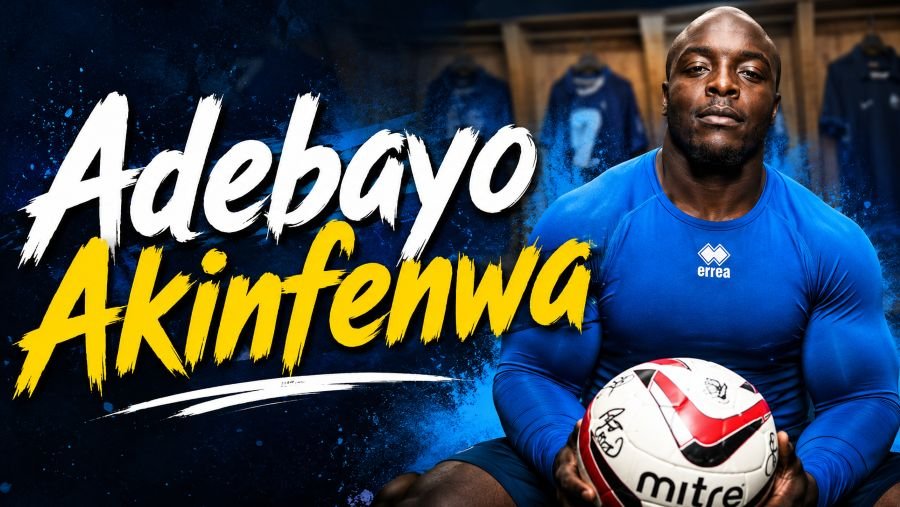
Adebayo Akinfenwa is an English former professional footballer, media personality and entrepreneur. Fans know him as “The Beast” because of his powerful physique, strong playing style and larger-than-life personality.
His path to success was never easy. He faced rejection in England, moved abroad as a teenager and experienced racial abuse while trying to establish his career. Instead of giving up, he built a respected journey across the English Football League.
Adebayo Akinfenwa is best known as one of football’s strongest players and a cult hero who scored more than 200 senior goals.
Adebayo Akinfenwa Quick Bio
| Field | Information |
|---|---|
| Public Name | Adebayo Akinfenwa |
| Commonly Listed Full Name | Saheed Adebayo Akinfenwa |
| Nicknames | The Beast, Bayo |
| Date of Birth | 10 May 1982 |
| Age | 44 years old |
| Birthplace | Islington, London, England |
| Nationality | English |
| Family Heritage | Yoruba Nigerian |
| Profession | Former professional footballer, broadcaster and entrepreneur |
| Playing Position | Centre-forward |
| Preferred Foot | Right |
| Senior Career Start | 2001 |
| Professional Retirement | 2022 |
| Career Appearances | More than 750 |
| Career Goals | More than 220 |
| Famous For | Physical strength, goalscoring and Beast Mode On |
| Major Individual Honour | Sir Tom Finney Award, 2023 |
Who Is Adebayo Akinfenwa?
Adebayo Akinfenwa is a former centre-forward who spent more than two decades playing football in Lithuania, Wales and England. His career included spells with Swansea City, Northampton Town, Gillingham, AFC Wimbledon and Wycombe Wanderers.
He became famous outside traditional football audiences because of his unusual size and strength. Several FIFA video games ranked him among the strongest footballers in the world.
However, his career was not built on strength alone. His finishing, positioning, aerial ability and understanding of defenders helped him score consistently across the lower divisions of English football.
His long professional football journey also made him an example of how determination can create success without following a traditional route.
Early Life and Nigerian Family Heritage
Akinfenwa was born on 10 May 1982 in Islington, North London. He grew up in a British household with strong Yoruba Nigerian roots.
His family provided discipline and support, although they did not live a wealthy lifestyle. Football became an important part of his childhood and gave him something positive to work towards.
He supported Liverpool while growing up and admired former England international John Barnes. Years later, he scored against Liverpool in the FA Cup, making the moment especially meaningful.
From an early age, his body shape was different from many young footballers. Coaches sometimes focused more on his size than his ability, creating doubts about whether he could become a professional player.
Youth Football and Early Rejection
Akinfenwa spent time in Watford’s youth system, but he did not receive a clear route into senior English football.
Several people believed he was too large to succeed as a professional striker. Instead of allowing those opinions to end his ambitions, he searched for an opportunity outside England.
His experience shows the importance of resilience when a young player faces rejection. The doubts surrounding his body eventually became motivation rather than a permanent barrier.
At around 18 years old, he accepted an opportunity to move to Lithuania. It was a major decision for a young player who had grown up in London.
Starting His Career in Lithuania
Akinfenwa began his senior career with Lithuanian club FK Atlantas. He helped the team win the 2001 Lithuanian Football Cup and reportedly scored the winning goal in the final.
Although he achieved success on the field, his time in Lithuania was difficult. He later spoke about experiencing racial abuse from supporters.
Living abroad also forced him to become more independent. He had to adapt to a different football culture, climate and way of life while still developing as a young striker.
He later spent a short period with Laisvė Šilutė before returning to Britain. The experience made him mentally stronger and prepared him for the unpredictable career that followed.
Return to Britain and Barry Town Success
After leaving Lithuania, Akinfenwa joined Barry Town in Wales. He became part of a successful side that won domestic honours.
Barry Town later experienced serious financial difficulties. The situation forced several professional players to leave and pushed Akinfenwa back into the search for a stable club.
He subsequently had short spells with Boston United, Leyton Orient, Rushden & Diamonds and Doncaster Rovers.
These frequent moves could have damaged his confidence. Instead, he continued working until his goalscoring performances created a more secure opportunity.
Torquay United Breakthrough
Akinfenwa joined Torquay United in 2004 and enjoyed one of his first major English Football League breakthroughs.
He scored regularly during the 2004–05 season and became an important part of the team. His performances showed that he could combine power with controlled finishing.
Torquay reportedly named him their Player of the Year. His form attracted the attention of Swansea City, who signed him in 2005.
This move gave him the platform to become a recognised Football League striker rather than a player moving between short contracts.
Swansea City Career
Akinfenwa made history at Swansea City by scoring the first competitive goal at the club’s new Liberty Stadium. His goal secured a 1–0 victory over Tranmere Rovers in August 2005.
He formed an effective attacking partnership with Lee Trundle. Their different qualities gave Swansea a dangerous and balanced forward line.
In 2006, both strikers scored as Swansea defeated Carlisle United 2–1 in the Football League Trophy final. Akinfenwa’s late goal proved decisive.
Swansea also reached the League One play-off final that season but lost to Barnsley in a penalty shootout. Akinfenwa was one of the players who missed from the spot.
His second Swansea season ended early after he suffered a broken right leg against Scunthorpe United. He left the club in 2007 after rejecting a new contract.
Northampton Town and Gillingham
Following a short stay with Millwall, Akinfenwa joined Northampton Town. The club became one of the most important parts of his career.
He scored consistently and developed a close relationship with supporters. His ability to protect the ball allowed teammates to move forward and join attacks.
Akinfenwa later joined Gillingham before returning to Northampton for a second spell. He then went back to Gillingham, showing how highly both clubs valued his contribution.
His career during this period was built on consistency, teamwork and physical strength. He was difficult to move off the ball and dangerous inside the penalty area.
AFC Wimbledon and the Liverpool Goal
Akinfenwa signed for AFC Wimbledon in 2014. He quickly became popular with supporters because of his goals, personality and connection with the crowd.
In January 2015, he scored against Liverpool during an FA Cup third-round match. Although Wimbledon lost 2–1, the goal against his childhood club became one of his favourite career memories.
He also helped Wimbledon reach the 2016 League Two play-off final against Plymouth Argyle.
Akinfenwa scored a penalty as Wimbledon won 2–0 and earned promotion to League One. It was his final kick for the club.
During his post-match television interview, he joked that he was technically unemployed and asked managers to contact him. The moment went viral and added to his cult-hero status.
Wycombe Wanderers Career
Wycombe Wanderers signed Akinfenwa shortly after his departure from Wimbledon. The move became the longest and most successful period of his career.
He helped Wycombe earn promotion from League Two in 2018. His goals, experience and dressing-room influence made him an important figure under manager Gareth Ainsworth.
His leadership was especially valuable in a squad that often competed against clubs with larger budgets.
In 2020, Wycombe defeated Oxford United in the League One play-off final. The result took the club into the Championship for the first time in its history.
Akinfenwa remained with Wycombe until 2022. His final professional appearance came at Wembley in the League One play-off final against Sunderland.
Career Statistics and Major Achievements
The official EFL retrospective credits Akinfenwa with 755 appearances and 221 goals across his long career.
Those numbers reflect impressive consistency for a player who was repeatedly told that his body shape would stop him from succeeding.
His team achievements included domestic honours in Lithuania and Wales, the Football League Trophy with Swansea, and promotions with AFC Wimbledon and Wycombe Wanderers.
In 2023, he received the Sir Tom Finney Award from the EFL. The honour recognised his playing career, personality and contribution to English league football.
Playing Style and Famous Strength
Akinfenwa played mainly as a traditional centre-forward. He used his body to hold off defenders, protect possession and create space for teammates.
His strength made him difficult to challenge, but he also had good movement inside the penalty area. Many of his goals came from intelligent positioning rather than simply overpowering opponents.
His approach was different from players known mainly for speed or football intelligence, yet he understood how to use his unique qualities effectively.
FIFA video games helped make him internationally famous by repeatedly placing him among the strongest players in the game. This recognition introduced him to younger fans around the world.
Racism, Doubt and Mental Strength
Akinfenwa faced racial abuse during his early career in Lithuania. He also spoke publicly about later racist incidents connected with English football.
These experiences became part of his wider message about identity, confidence and refusing to be defined by other people.
He was regularly judged because of his weight and muscular appearance. Even after scoring goals, some observers continued to question whether his body belonged in professional football.
Akinfenwa answered those doubts by playing for more than two decades. His career became proof that footballers do not all need to have the same physical appearance.
Beast Mode On Brand
The phrase “Beast Mode On” became central to Akinfenwa’s public identity. It represented confidence, hard work and the ability to respond positively to criticism.
He developed the phrase into a clothing and lifestyle brand. The business allowed him to build an identity outside football before his playing career ended.
His personality also made him attractive to broadcasters, brands and digital audiences. Unlike many lower-league players, he developed international recognition without playing in the Premier League.
His success shows how athletes can use personality and honest storytelling to create opportunities away from the pitch.
Book, Documentary and Television Work
Akinfenwa released his autobiography, The Beast: My Story, which covers his childhood, football journey, racial abuse and rise to public fame.
His life was also explored in the 2022 documentary Beast Mode On. The film followed his final professional season and examined how he prepared for retirement.
In 2025, he appeared as a contestant on Celebrity SAS: Who Dares Wins. The demanding programme tested his physical and mental endurance outside football.
These projects helped audiences understand that his public image was based on more than muscles. His story also involved rejection, discipline, business and personal growth.
Life After Professional Football
Akinfenwa retired from professional football in 2022. He briefly returned to play for non-league club Faversham Town in 2023 before stepping away again.
He has since worked as a football broadcaster, speaker, content creator and entrepreneur.
In July 2025, he partnered with Footballco to launch the Beast Mode On Podcast. The programme features footballers discussing obstacles, rejection and difficult moments in their careers.
As of June 2026, Akinfenwa remains active in football media and continues promoting his Beast Mode On message through interviews, events and digital content.
Adebayo Akinfenwa’s Legacy
Akinfenwa’s legacy is not based on winning the biggest trophies in world football. It comes from building an unforgettable career after being told that he did not fit the normal image of a professional player.
He became a hero at several clubs and helped AFC Wimbledon and Wycombe Wanderers achieve important promotions.
His personality connected lower-league football with global video-game and social-media audiences.
Most importantly, his journey encourages people to accept their differences. The message behind his career is simple: other people may form opinions, but individuals must define their own value.
Interesting Facts About Adebayo Akinfenwa
- His most famous nickname is “The Beast.”
- He scored the first competitive goal at Swansea’s Liberty Stadium.
- He scored against his childhood club Liverpool in the FA Cup.
- His final kick for AFC Wimbledon was a successful play-off final penalty.
- He helped Wycombe reach the Championship for the first time.
- FIFA video games made him famous as one of football’s strongest players.
- He created the Beast Mode On brand before ending his playing career.
- He received the Sir Tom Finney Award in 2023.
Conclusion
Adebayo Akinfenwa’s biography is the story of a footballer who turned rejection into motivation. From leaving London for Lithuania to becoming a fan favourite across the English Football League, he built his career through persistence and self-belief.
His strength made him famous, but his goals, promotions and influence made him respected. Today, The Beast remains a powerful football personality whose journey continues through media, business and motivational work.
Frequently Asked Questions
Who is Adebayo Akinfenwa?
He is an English former professional footballer, broadcaster and entrepreneur known as The Beast.
What is Adebayo Akinfenwa’s full name?
His full name is commonly listed as Saheed Adebayo Akinfenwa.
How old is Adebayo Akinfenwa?
He is 44 years old as of June 2026.
Where was Adebayo Akinfenwa born?
He was born in Islington, North London, England.
What is Adebayo Akinfenwa’s heritage?
He is English and comes from a Yoruba Nigerian family background.
Which position did he play?
He played mainly as a centre-forward or striker.
Why is Adebayo Akinfenwa called The Beast?
He received the nickname because of his muscular physique, physical power and strong playing style.
When did Adebayo Akinfenwa retire?
He retired from professional football in 2022 and briefly played non-league football in 2023.
